

Unveiling the Timeline: How Long to Build an AI Product?
Building an AI product is a complex journey filled with challenges. Discover the key stages and insights that can guide you from concept to deployment!
Unveiling the Timeline: How Long to Build an AI Product?
How Long Does It Really Take to Build an AI Product?
Creating an AI product is akin to embarking on a journey filled with innovation, technical challenges, and strategic planning. While the allure of artificial intelligence (AI) captivates many, the path from concept to deployment is neither short nor straightforward. This comprehensive guide demystifies the process, offering insights into the various stages and factors influencing the timeline of AI product development. By understanding these elements, businesses can better navigate the complexities and set realistic expectations for their AI endeavors, focusing on user experience and SEO best practices.
Understanding the Foundations of AI Product Development
AI product development is a multifaceted process that requires a deep understanding of both the technological and user-centric aspects. At the heart of any successful AI project lies a robust foundation that integrates user experience design, strategic planning, and iterative testing.
The Role of User Experience in AI
User experience (UX) is pivotal in AI product development, directly impacting how users interact with and perceive the product. According to Xpand Portal, a well-designed UX can increase conversion rates by up to 400%. This underscores the necessity of creating intuitive and engaging interfaces that cater to user needs. The design process should involve continuous user feedback and testing to refine the product and ensure it meets user expectations.
Real-world Example: Consider an AI-driven health app that advises users on fitness and diet. Its success hinges not just on the accuracy of its recommendations but also on the ease with which users can navigate the app. If the interface is cumbersome, users may abandon it despite its sophisticated AI capabilities.

user_experience_impact
Strategic Planning and Research
Strategic planning is essential to define the scope, objectives, and timeline of the AI project. This involves conducting thorough market research to understand user needs and identify potential challenges. Developing detailed user personas based on real insights, as suggested by Inviqa, can guide the design and functionality of the AI product, ensuring it resonates with the target audience.
Actionable Steps:
- Conduct Market Research: Use surveys and focus groups to gather data on user needs.
- Develop User Personas: Create detailed profiles representing your ideal users.
- Set Clear Objectives: Define what success looks like for your AI product.
Key Phases of AI Product Development
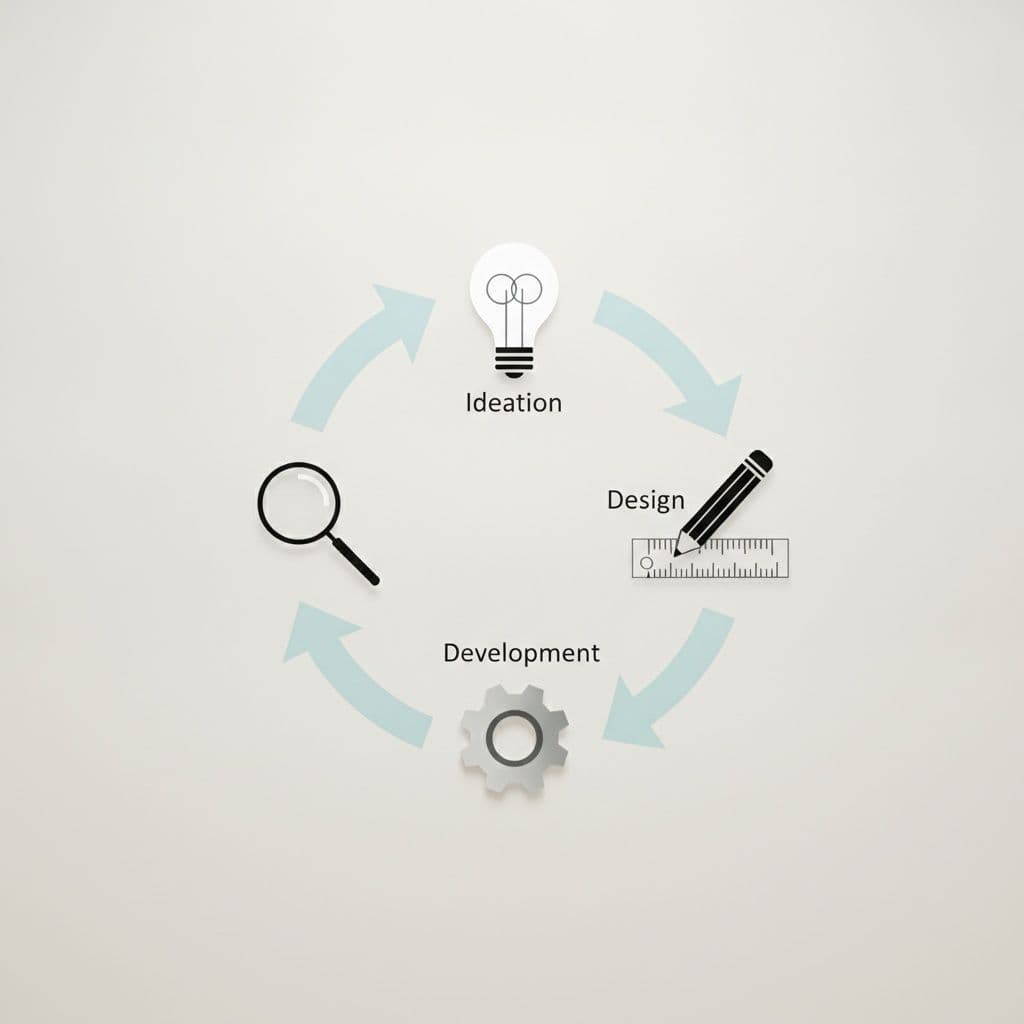
Building an AI product involves several distinct phases, each with its own set of tasks and challenges. Understanding these phases can help in planning and executing a successful AI project.
1. Ideation and Conceptualization
The journey begins with ideation and conceptualization, where the focus is on identifying the problem the AI product aims to solve. This phase involves brainstorming sessions, competitive analysis, and feasibility studies. It's crucial to validate the concept through market research and user interviews to ensure it addresses a genuine need.
Common Pitfalls and Solutions:
- Pitfall: Rushing to development without a clear problem statement.
- Solution: Spend ample time in the ideation phase, ensuring the problem is well-defined and the solution is viable through feasibility studies.
2. Design and Prototyping
Once the concept is validated, the next step is designing and prototyping. This phase is vital for visualizing the AI product and testing its core functionalities. Rapid prototyping allows for quick iterations based on user feedback, enabling designers to create a user-friendly and engaging interface.
Advanced Tip: Utilize tools like Figma or Sketch for wireframing, and incorporate feedback loops to iterate designs quickly. This not only saves time but also aligns the product more closely with user expectations.
3. Development and Testing
The development and testing phase is where the AI model is built and integrated into the product. This involves selecting the right algorithms, training data, and testing the model's performance. According to Medium, continuous testing and iteration are crucial to refine the AI model and ensure it meets the desired accuracy and efficiency.
Visual Description: Imagine a laboratory environment where scientists continuously test and tweak formulas. Similarly, in AI development, models undergo rigorous testing and refinement to ensure they meet performance benchmarks.
ai_development_phases
Challenges in AI Product Development
Developing an AI product is not without its challenges. From technical hurdles to ethical considerations, understanding these obstacles can help in mitigating risks and ensuring the project's success.
- Technical Challenges: Include data quality, algorithm selection, and system integration. Ensuring high-quality data is critical for training accurate AI models. Additionally, selecting the appropriate algorithms and integrating the AI system with existing infrastructure require careful consideration and expertise.
- Ethical and Regulatory Considerations: AI products must adhere to ethical guidelines and regulatory standards. This includes ensuring data privacy, avoiding biased algorithms, and maintaining transparency in AI operations. Companies must stay informed about evolving regulations to avoid legal issues and build trust with users.
Quotable Insight: "In the realm of AI, ethics is not just a checkbox—it's the foundation upon which trust is built."

technical_challenges_comparison
Best Practices for User Experience and SEO in AI Products
Integrating best practices for user experience and SEO can significantly enhance the effectiveness and reach of AI products. By focusing on these areas, businesses can improve user engagement and visibility.
Enhancing User Experience
Creating a seamless user experience involves intuitive navigation, responsive design, and personalized interactions. Incorporating user feedback and conducting usability testing can lead to a more refined product that resonates with users. As highlighted by Xpand Portal, a positive user experience is crucial for retaining and attracting users.
Actionable Steps:
- Conduct Usability Testing: Regularly test the product with real users.
- Implement Feedback Loops: Use feedback to make iterative improvements.
- Focus on Personalization: Tailor the user experience to individual preferences.
Implementing SEO Best Practices
SEO plays a vital role in increasing the visibility of AI products. Key strategies include optimizing content with relevant keywords, improving site speed, and ensuring mobile-friendliness. According to Google's SEO Starter Guide, using structured data can help search engines understand the content better, enhancing search rankings and visibility.
Advanced Tip: Integrate AI-driven SEO tools like Clearscope or SurferSEO to optimize content dynamically, ensuring it remains relevant and competitive in search rankings.
Content Marketing Strategies for AI Products
Effective content marketing can bolster the success of AI products by attracting and engaging the target audience. By implementing tailored strategies, businesses can build authority and foster customer loyalty.
Storytelling and Content Formats
Storytelling is a powerful tool in content marketing, creating a personal connection with the audience. Utilizing various content formats, such as blogs, videos, and social media posts, can engage users and enhance brand visibility. Salesforce emphasizes the importance of understanding the target audience to create relevant and compelling content.
Real-world Example: A company like IBM uses storytelling in its AI campaigns to showcase how their technology changes lives, from healthcare to environmental conservation, thereby connecting emotionally with their audience.
Leveraging Social Media and Analytics
Social media platforms provide a valuable channel for promoting AI products and engaging with users. Consistent posting and interaction can increase brand visibility and foster community. Additionally, tracking performance metrics through analytics can inform content strategy and improve marketing effectiveness.
Actionable Steps:
- Identify Key Platforms: Focus on where your target audience is most active.
- Create a Content Calendar: Plan and schedule posts for consistency.
- Analyze Engagement Data: Use insights to refine your approach and content.
Additional Considerations in AI Product Development
The Importance of a Skilled Team
Building an AI product requires a multidisciplinary team with expertise in machine learning, data science, UX design, and software development. Ensuring that your team has the right skills and experience is crucial for navigating the complexities of AI development.
Actionable Steps:
- Recruit Diverse Talent: Ensure your team includes diverse skills and perspectives.
- Invest in Training: Provide continuous learning opportunities to keep skills sharp.
- Foster Collaboration: Encourage cross-disciplinary collaboration to enhance innovation.
Monitoring and Maintenance Post-Launch
The work doesn't end at launch. Continuous monitoring and maintenance are critical to ensure the AI product remains effective and relevant. This involves tracking performance metrics, updating algorithms, and responding to user feedback.
Quotable Insight: "An AI product is a living entity that evolves with its environment and users."
Conclusion: Navigating the Path to AI Product Success
Building an AI product is a complex process that demands careful planning, strategic execution, and continuous iteration. By understanding the key phases, challenges, and best practices, businesses can set realistic expectations and navigate the path to success. Emphasizing user experience, leveraging SEO strategies, and employing effective content marketing can significantly enhance the impact and reach of AI products. As companies embark on this journey, maintaining a user-centric approach and staying informed about technological advancements will be crucial in achieving long-term success.
For businesses ready to dive into the world of AI, the path may be challenging, but with the right strategies and commitment, the rewards are well worth the effort. Start by assessing your current capabilities, defining clear goals, and embracing the iterative nature of AI development to create products that truly resonate with users and drive business growth.
Frequently Asked Questions (FAQs)
What is the typical timeline for developing an AI product?
The timeline for developing an AI product can vary widely depending on the complexity of the project, the resources available, and the specific industry. On average, it may take anywhere from six months to over a year from concept to deployment.
How do I ensure my AI product is user-friendly?
Focus on a user-centric design approach, conduct regular usability testing, and incorporate user feedback into iterative design improvements. Tools like A/B testing can be invaluable in optimizing the user experience.
What are the key factors in selecting the right AI model for my product?
Key factors include the availability and quality of data, the specific problem you're trying to solve, and the computational resources at your disposal. Working with experienced data scientists can help you choose the most suitable model.
How can I keep my AI product updated post-launch?
Implement a robust monitoring system to track performance metrics and user feedback. Regularly update your algorithms and data to ensure the product adapts to changing user needs and technological advancements.
What role does content marketing play in the success of an AI product?
Content marketing is crucial for building brand awareness and engaging with your target audience. By sharing valuable insights and stories, you can establish your brand as a thought leader in the AI space and foster customer loyalty.
Community
Join the conversation
More Blog Posts

Mastering AI Product Timelines: From Concept to Completion
Unlock the secrets of AI product development! Explore essential phases, realistic timelines, and strategies for success in your projects."

AI Agents: The Next Generation of Business Software Transforming Operations
Discover how AI agents are revolutionizing business operations by transforming software into proactive collaborators that anticipate needs and streamline complex processes autonomously.

AI Agents in Enterprise Workflows: Transforming Business Operations for 2026
Discover how AI agents are revolutionizing enterprise workflows, transforming businesses into proactive, autonomous entities that enhance efficiency and drive measurable value.