

Intelligent Automation: Process Visibility Before You Hire an Agent
Discover why process visibility is crucial before embracing intelligent automation, and learn how to effectively map your operations for successful implementation.
Intelligent Automation: Prioritize Process Visibility Before Hiring an Agent
In today's fast-paced business environment, intelligent automation offers a beacon of efficiency and precision. However, diving into automation without full visibility into your processes can lead to costly missteps. This guide will explore why understanding your business processes is essential before hiring an automation agent, and how you can achieve successful automation by mapping your path, counting exceptions, and choosing the right tools.
Understanding Intelligent Automation
Intelligent automation combines artificial intelligence (AI) with robotic process automation (RPA) to enhance business operations. By automating repetitive tasks and using AI to make informed decisions, businesses can achieve faster execution, reduced uncertainty, and stronger decision-making capabilities. However, the journey to intelligent automation begins with a crucial step: process visibility.
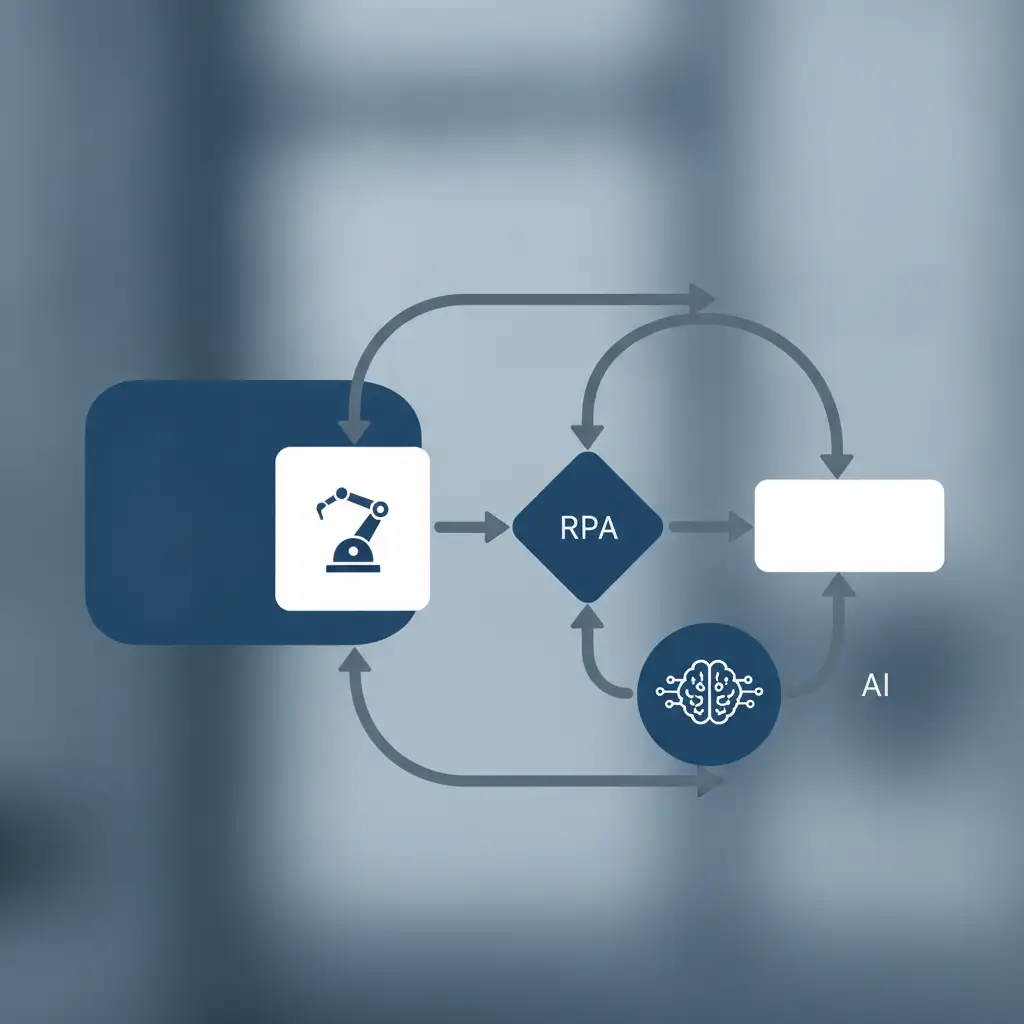
Business process flow, simple icons different stages, arrows connecting stages, AI and RPA icons integrated into the flow, g
What is Process Visibility?
Process visibility is the comprehensive understanding of how your business processes operate in reality. It involves mapping out workflows, identifying bottlenecks, and understanding the exceptions that may occur. Without process visibility, businesses risk automating inefficiencies and exceptions, leading to increased costs and operational disruptions.
Importance of Process Visibility in Automation
- Prevents Automating Inefficiencies: By understanding your processes, you can identify areas that require improvement before automation.
- Identifies Exceptions: Recognizing exceptions in workflows allows for the design of flexible automation systems that can handle real-world deviations.
- Ensures Accurate Tool Selection: With clear process visibility, you can choose the right automation tools that align with your business needs.
The Framework: Map the Path, Count the Exceptions, Pick Tools
Step 1: Map the Path
Mapping your business processes involves creating a detailed diagram of how tasks are completed from start to finish. This "as-is" process model should include every step, decision point, and actor involved.
- Tools for Mapping: Use tools like Lucidchart or Microsoft Visio to visually represent your processes.
- Include All Stakeholders: Engage employees from various departments to ensure a comprehensive map.
- Focus on Real Processes: Document processes as they are performed, not as they should be ideally.
Case Study: A Retailer's Path to Automation
A mid-sized retailer wanted to automate their order fulfillment process. By mapping their current process, they discovered a redundant step in inventory checking, which was slowing down order processing. Eliminating this step before automation saved them time and resources.
Step 2: Count the Exceptions
Exceptions are deviations from the standard process path. They can range from technical errors to process-specific deviations such as delays in approvals or missing information.
- Classify Exceptions: Differentiate between technical exceptions (e.g., server errors) and process exceptions (e.g., approval delays).
- Measure Frequency and Impact: Determine how often exceptions occur and their impact on operations.
- Develop Exception Handling Strategies: Plan for how exceptions will be managed within the automation framework.
Insights from Industry Leaders
"Effective management of process exceptions requires deep integration and proactive alerting," notes a Redwood article on managing workflow disruptions. This insight emphasizes the need for businesses to prepare for real-world variables that can affect automation.
Step 3: Pick the Tools
Choosing the right tools is critical for successful automation. Tools should align with your business goals and be capable of handling the exceptions identified in your processes.
- Evaluate Automation Platforms: Consider platforms that offer flexibility and integration capabilities.
- Test with Prototypes: Start with small-scale implementations to test the effectiveness of chosen tools.
- Consider AI Integration: Leverage AI capabilities for more intelligent decision-making and exception management.
Real-World Application: AI in Manufacturing
Jaxxon Technology Services explored AI integration in traditional sectors like manufacturing, providing measurable value without disruptive changes. By aligning AI tools with specific business challenges, companies can enhance efficiency and streamline operations.
Exception Management Strategies for Small Businesses
Exception management is crucial for maintaining smooth business operations. Here are strategies small businesses can implement:
- Centralized Monitoring: Use tools like SAP's Exception Management Cockpit for a centralized view of exceptions.
- Automated Alerts: Set up automated alerts for quick response to exceptions.
- Responsibility Assignments: Assign clear roles for managing exceptions to ensure accountability.
- Continuous Improvement: Regularly review and update exception management processes to improve efficiency.

Diverse team of professionals in a modern office, gathered around a large table with laptops and tablets, discussing and analyzing data
Expert Opinion
"Maintaining context for each exception facilitates safe recovery and prevents the repetition of errors," asserts Alltomate's article on exception management automation. This underscores the importance of a structured approach to exception handling.
How to Automate Business Processes
Automating business processes involves several key steps:
- Identify Repeatable Tasks: Focus on tasks that are repetitive and time-consuming.
- Assess Process Suitability: Ensure the process is stable and predictable, with minimal exceptions.
- Select Appropriate Tools: Use tools that integrate with existing systems and offer scalability.
- Pilot and Scale: Start with pilot projects to test effectiveness before scaling up.
- Monitor and Optimize: Continuously monitor performance and make adjustments as needed.
Case Study: Insurance Sector Automation
In the insurance sector, Ultimus showcases how automation improved compliance and reduced costs. By automating claim processing, they achieved faster turnaround times and enhanced customer satisfaction.
Tools and Technologies for Intelligent Automation
Several tools and technologies can aid in implementing intelligent automation:
- RPA Platforms: Such as UiPath and Automation Anywhere, for automating repetitive tasks.
- AI Frameworks: Like LangChain and AutoGen Microsoft, for integrating AI into workflows.
- Cloud Solutions: For scalable and flexible automation implementations.
Definition Box: Intelligent Automation
"Intelligent automation is the integration of AI with RPA to enhance business operations by automating tasks and making informed decisions."
Frequently Asked Questions
How to automate business processes?
To automate business processes, start by mapping your workflows, identifying exceptions, and selecting appropriate tools that align with your business objectives. Begin with pilot projects and scale gradually, monitoring performance continuously.
Why is process visibility important in automation?
Process visibility ensures that you understand your workflows, identify inefficiencies, and manage exceptions before automation. This leads to more effective and efficient automation implementations.
What are exception management strategies for small businesses?
Small businesses can implement centralized monitoring, automated alerts, responsibility assignments, and continuous improvement processes to manage exceptions effectively.
How do you identify exceptions in a process?
Exceptions can be identified by monitoring workflows, analyzing deviations, and categorizing them into technical and process-specific exceptions. Measuring their frequency and impact is also crucial.
What are the benefits of intelligent automation?
Intelligent automation offers faster execution, reduced operational uncertainty, stronger decision-making, and improved overall efficiency by combining AI with RPA.
How do you choose the right automation tools?
Choose tools that offer flexibility, integration capabilities, and align with your business goals. Evaluate their scalability and ability to handle identified exceptions.
How can AI enhance automation processes?
AI can enhance automation by providing intelligent decision-making capabilities, improving process efficiency, and handling exceptions more effectively.
What are common pitfalls in automation projects?
Common pitfalls include automating inefficient processes, neglecting exception management, choosing inappropriate tools, and failing to align automation with business objectives.
Conclusion
Embarking on the journey of intelligent automation requires a clear understanding of your current processes. By ensuring process visibility, managing exceptions, and choosing the right tools, small businesses can avoid automating the wrong mess and instead achieve operational excellence. Consider starting your automation journey today by mapping your processes and identifying key areas for improvement. This strategic approach will ensure your business reaps the full benefits of intelligent automation.
By following this comprehensive guide, small business owners can navigate the complexities of automation and harness the power of intelligent technologies to drive growth and efficiency. Remember, if you cannot describe the exception path, you cannot safely automate it. Spend a week on the work-as-done before you spend a quarter on the work-as-imagined.
Community
Join the conversation
More Blog Posts

AI Agents: The Next Generation of Business Software Transforming Operations
Discover how AI agents are revolutionizing business operations by transforming software into proactive collaborators that anticipate needs and streamline complex processes autonomously.

AI Readiness Assessment: The Complete Guide to Preparing Your Company for Intelligent Automation
Discover why AI readiness is crucial for success in automation, focusing on data quality, workforce capabilities, and governance to avoid the pitfalls of failed projects.

AI Agents in Enterprise Workflows: Transforming Business Operations for 2026
Discover how AI agents are revolutionizing enterprise workflows, transforming businesses into proactive, autonomous entities that enhance efficiency and drive measurable value.