
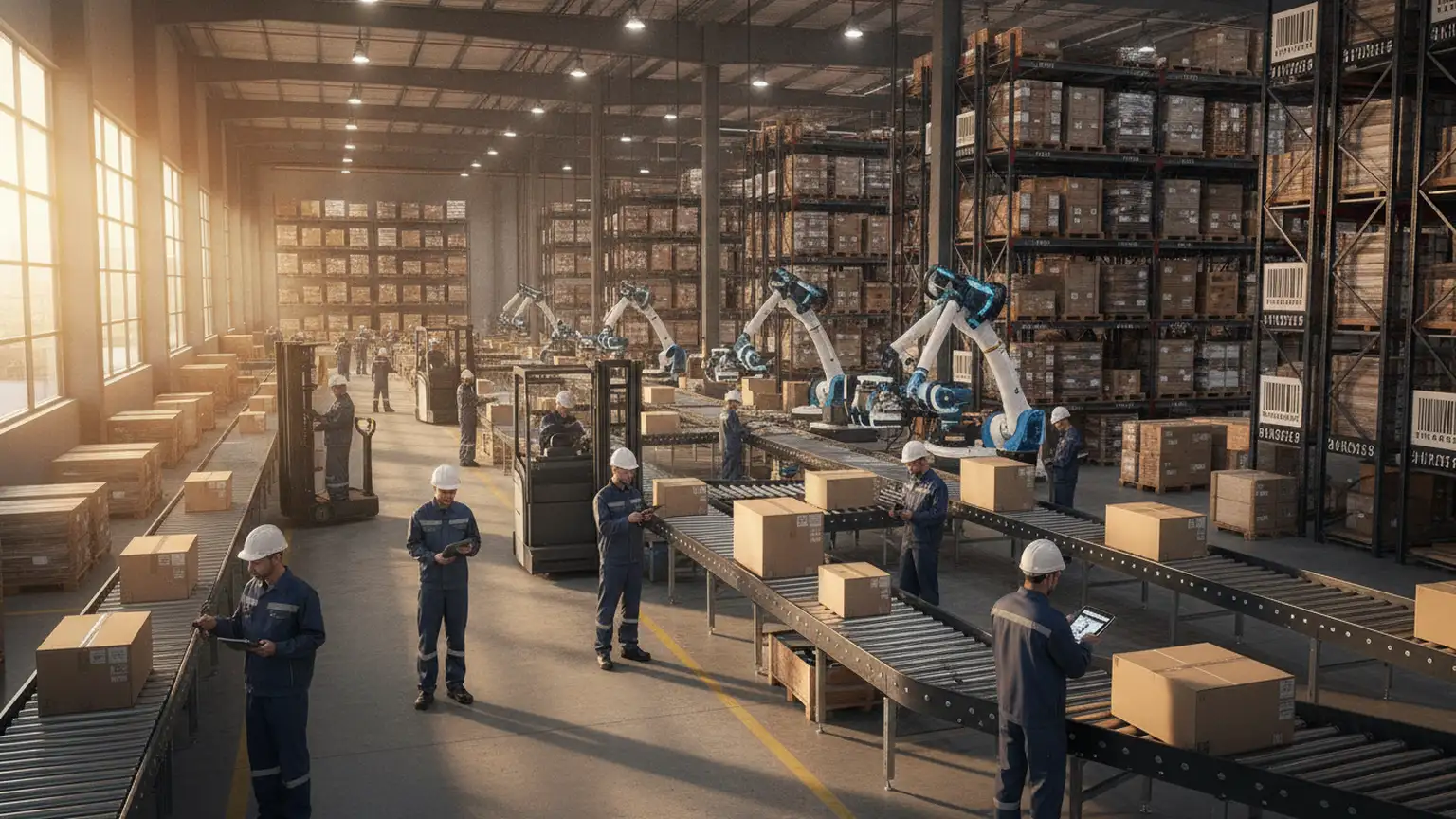
AI in Logistics: Revolutionizing Traditional Warehouses with Incremental Intelligence
Discover how integrating AI into traditional warehouses can enhance efficiency, reduce inventory loss, and transform low-tech operations into streamlined, modern logistics systems.
AI in Logistics: Incremental Intelligence Revolutionizing Traditional Warehouses
In today's rapidly evolving business landscape, warehouse automation is becoming a key component of digital transformation strategies. Even the most traditional warehouses are beginning to see the benefits of integrating AI in logistics. While many might associate AI with high-tech operations, the reality is that AI can bring significant value to low-tech environments—think warehouses still reliant on clipboards and radios. This guide walks you through how to effectively implement AI for low-tech operations, focusing on practical outcomes such as reducing lost inventory and improving operational efficiency.
What is AI in Logistics?
AI in logistics refers to the use of artificial intelligence technologies to optimize supply chain and warehouse operations. By employing AI, businesses can automate repetitive tasks, enhance decision-making, and reduce errors in logistics management. According to Arvist AI, applications like real-time defect detection and automated inspections have minimized human error, significantly enhancing logistics operations.
How to Reduce Lost Inventory in Warehouses
Reducing lost inventory is a critical challenge in warehouses, especially those relying on traditional methods. AI offers a practical solution by enhancing visibility and accuracy in inventory management.
- AI-Powered Inventory Tracking: Implement AI-driven systems to continuously monitor inventory levels. With computer vision technology, AI can track each item as it enters and exits the warehouse, reducing the likelihood of lost or misplaced items.
- Photo Capture and Exception Flags: Use AI to automate the capture of item images as they arrive. Exception flags can alert managers to discrepancies, ensuring immediate human confirmation and reducing errors before data entry into ERP systems.
- Predictive Analytics: Leverage AI for predictive analytics to forecast inventory needs and prevent overstock or stockouts, a method emphasized by Made4net. This proactive approach helps maintain optimal inventory levels.
The win here is fewer lost pallets, not a keynote speech about futuristic technologies. It's about starting where work already happens and adding a thin intelligence layer where it counts.
Benefits of AI in Low-Tech Operations
AI can transform low-tech operations by adding layers of intelligence without necessitating a complete technological overhaul. Here are some key benefits:
- Enhanced Operational Efficiency: By automating repetitive tasks, AI reduces manual errors and speeds up processes. Scoro's insights on operational efficiency stress the importance of SOPs and automation tools to streamline tasks and improve productivity.
- Improved Decision-Making: AI aids in data-driven decision-making by providing real-time insights into operational performance. This capability aligns with the findings from the Global Supply Chain Institute, which highlights AI's role in optimizing logistics operations.
- Scalability: AI solutions can be scaled according to business needs, allowing gradual adoption alongside existing workflows. Toyota's approach to intermediate automation underscores the importance of aligning automation with business priorities for scalable improvements.
Improving Warehouse Efficiency with Technology
Improving warehouse efficiency doesn't require a complete system overhaul. By strategically integrating AI, businesses can achieve significant efficiency gains with minimal disruption.
Steps to Incremental AI Integration
- Assess Current Operations: Identify areas where AI can provide immediate value, such as inventory management and order processing. Use Jaxxon's AI strategy to align technology solutions with business goals.
- Pilot AI Solutions: Start with small AI projects that offer quick wins. For instance, implementing AI in inventory management can immediately reduce errors and improve accuracy.
- Integrate with Existing Systems: Ensure AI solutions are compatible with current systems to avoid disruption. The NIST AI Risk Management Framework advises on responsibly integrating AI by managing associated risks.
- Train Staff: Educate employees on AI's role and benefits to foster acceptance and ease the transition. Encourage collaboration between AI and human efforts to maximize efficiency.
- Evaluate and Iterate: Regularly assess AI's impact on operations and make iterative improvements. McKinsey emphasizes the need for strategic AI adoption to maximize productivity benefits.
Case Study: Walking the Receiving Dock Example
Consider a warehouse that still uses clipboards for inventory tracking. By integrating an AI system with a photo capture feature at the receiving dock, the warehouse can automatically document each incoming item. When discrepancies arise, exception flags can notify human workers for immediate confirmation. This simple AI augmentation helps reduce lost pallets and improves data accuracy before entering the ERP system.
Best Practices for Warehouse Automation
- Start Small: Begin with AI applications that require minimal changes to existing workflows. This approach minimizes risk and disruption.
- Focus on High-Impact Areas: Target areas where AI can quickly demonstrate value, such as inventory management and order processing.
- Leverage Data: Use AI to analyze historical data for insights that can inform future decisions and optimize operations.
- Monitor Performance: Implement KPIs to track AI's impact on operation efficiency and adjust strategies as needed.
- Foster a Culture of Innovation: Encourage experimentation and innovation to continuously explore AI's potential in logistics.
Frequently Asked Questions
How can AI help reduce lost inventory in traditional warehouses?
AI enhances inventory accuracy through real-time tracking and predictive analytics, reducing the risk of lost or misplaced items. By automating inventory checks and flagging discrepancies, AI helps ensure inventory data is precise and up-to-date.
What are the benefits of AI in low-tech warehouse operations?
AI improves operational efficiency by automating repetitive tasks, reducing manual errors, and providing real-time insights for better decision-making. It offers scalability and can be integrated with existing systems without requiring a complete overhaul.
How do I start integrating AI into my warehouse?
Begin by assessing current operations to identify areas where AI can provide immediate value. Pilot AI solutions in high-impact areas, ensure compatibility with existing systems, and train staff to work collaboratively with AI technologies.
Can AI improve warehouse efficiency without a full system overhaul?
Yes, AI can be integrated incrementally, allowing warehouses to benefit from improved efficiency and accuracy without a complete infrastructure change. Focus on automating key processes while maintaining existing workflows.
What role does AI play in decision-making?
AI enhances decision-making by offering data-driven insights and real-time analytics, enabling faster and more informed decisions. This capability reduces uncertainty and strengthens overall operational strategy.
How can AI be scaled in a traditional warehouse?
AI solutions can be scaled by gradually expanding their application across different operations. Start with pilot projects, evaluate their success, and then scale them up to cover more areas of the warehouse.
What are the risks of AI integration in warehouses?
Potential risks include data security concerns, system compatibility issues, and employee resistance. The NIST AI Risk Management Framework provides guidelines for mitigating these risks and ensuring responsible AI adoption.
Are there specific AI tools recommended for warehouse automation?
While specific tools depend on individual business needs, AI-powered inventory management systems and predictive analytics platforms are commonly used in warehouse automation. Ensure any AI tools are compatible with existing infrastructure before implementation.
Conclusion
Integrating AI into traditional warehouse operations doesn't need to be daunting. By starting with small, incremental changes and focusing on adding value where work already happens, warehouses can achieve significant improvements in efficiency and accuracy. Whether it's reducing lost inventory or enhancing decision-making, AI in logistics offers practical solutions that align with existing workflows. At Jaxxon Technology Services, we stand ready to help you navigate this transformation, turning AI from hype into measurable business value.
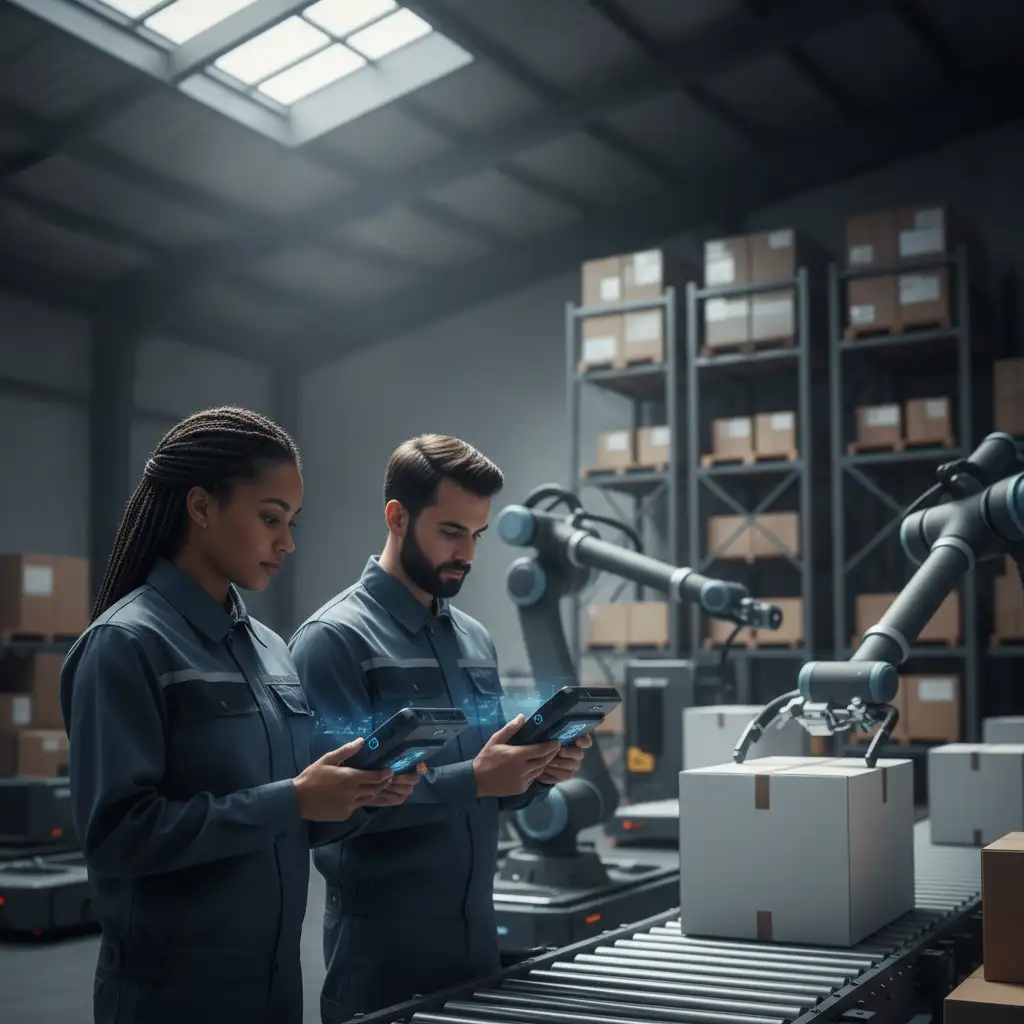
Warehouse workers using handheld devices, interacting with robotic arms, traditional warehouse setting with shelves and boxes, natural lighting, diverse team, focused expressions, collaborative atmosphere, AI-powered machinery in the background, seamless blend of technology and manual labor, efficient workflow, organized environment, tight practical close-up, shallow depth of field, photorealistic, minimal, modern, premium aesthetic, confident, modern, precise, color palette of deep blue, slate gray, black, white, square composition filling the entire frame, no letterboxing, no black or white bars, no borders, no text, no logos, no watermarks, no UI, avoid depicting specific mechanical internals or precise part
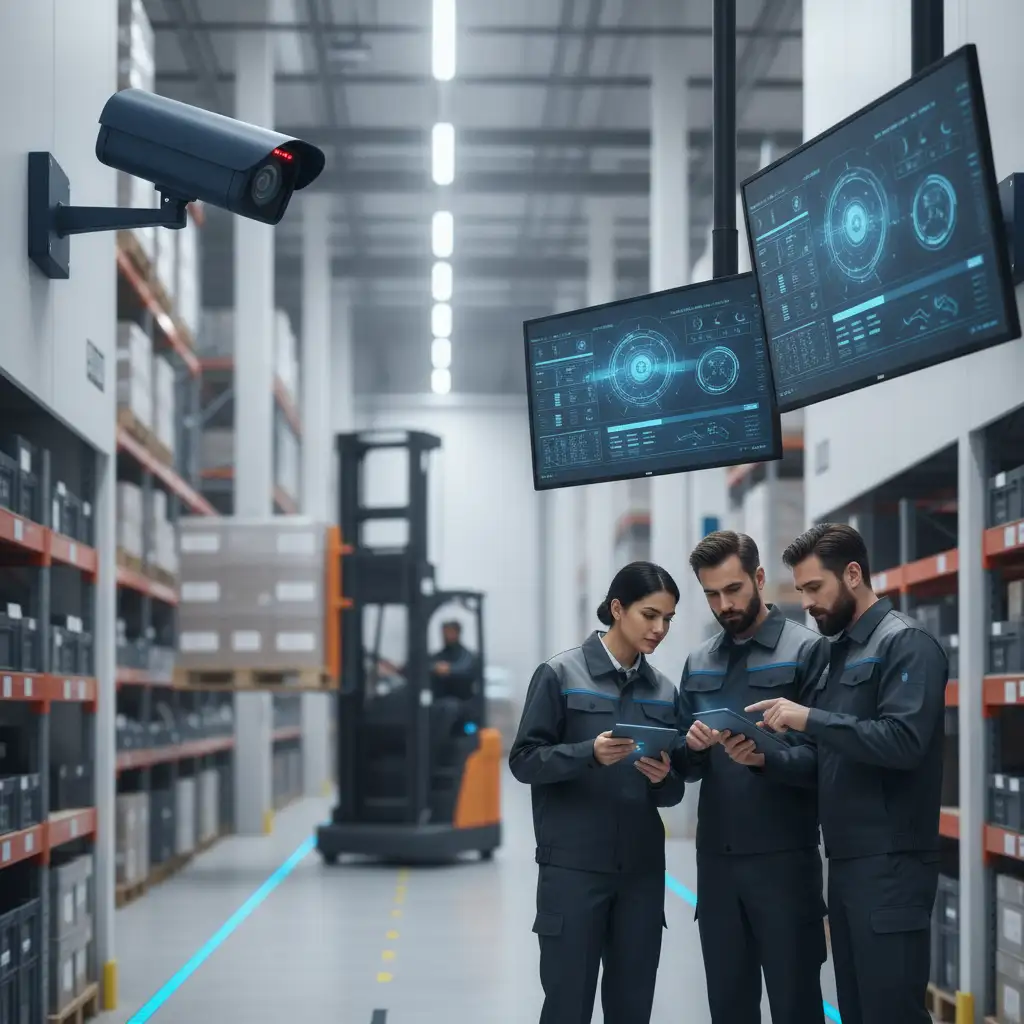
A bustling warehouse with workers in motion, AI-powered cameras mounted on walls tracking inventory, computer screens displaying real-time data, workers using handheld devices for inventory checks, a diverse team collaborating, bright lighting, organized shelves, forklifts moving goods, a sense of efficiency and technology integration, no visible text or logos, tight practical close-up, shallow depth of field, photorealistic, minimal, modern, premium aesthetic, confident, modern, precise, color palette of deep blue, slate gray, black, white, square composition filling the entire frame, no letterboxing, no black or white bars, no borders, no text, no logos, no watermarks, no
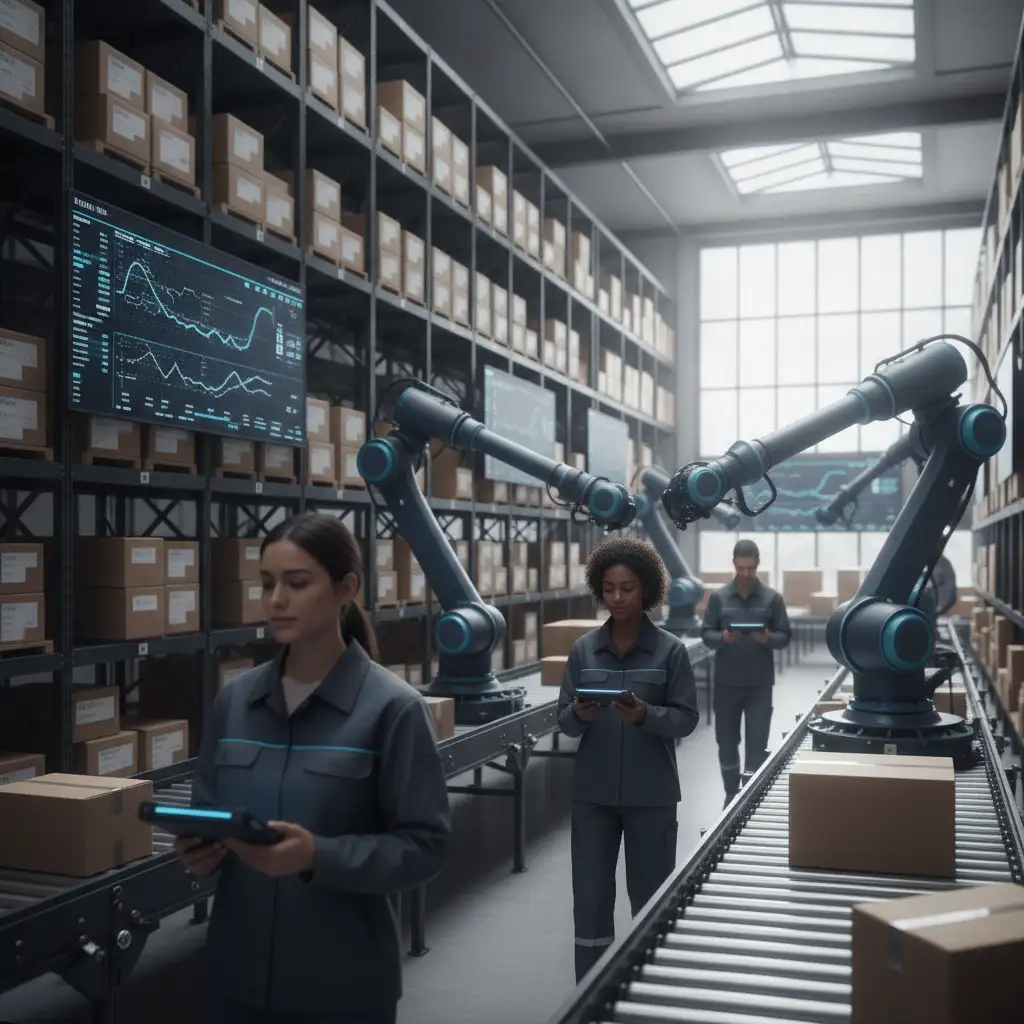
warehouse interior with workers using handheld devices, shelves filled with boxes, robotic arms sorting packages, digital screens displaying inventory data, natural lighting, people in motion, diverse workforce, modern yet functional environment, seamless interaction between humans and technology, focus on efficiency and collaboration, dynamic and bustling atmosphere, tight practical close-up, shallow depth of field, photorealistic, minimal, modern, premium aesthetic, confident, modern, precise, color palette of deep blue, slate gray, black, white, square composition filling the entire frame, no letterboxing, no black or white bars, no borders, no text, no logos, no watermarks, no UI, avoid depicting
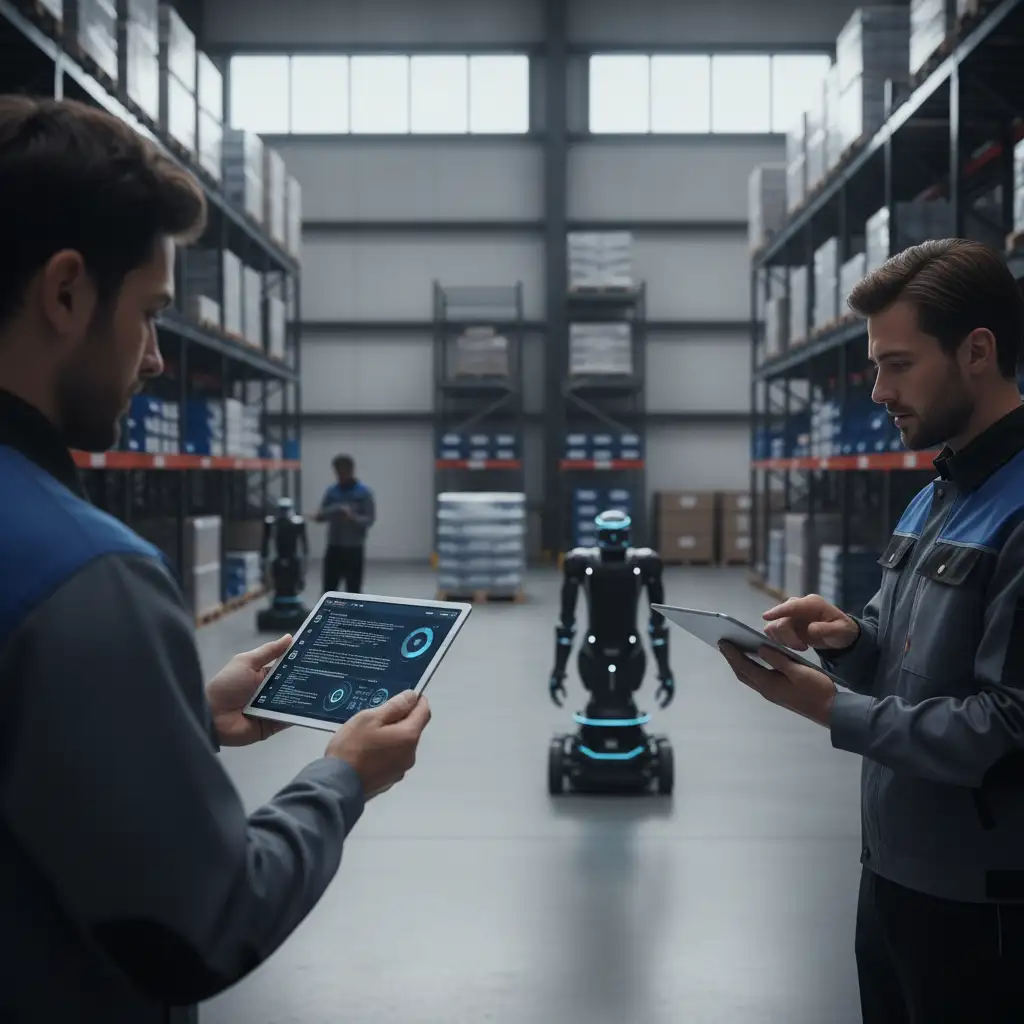
modern warehouse interior, diverse team of workers using handheld devices, autonomous robots moving pallets, shelves filled with organized inventory, soft natural lighting, focused atmosphere, people collaborating and analyzing data on tablets, seamless blend of technology and manual work, spacious and clean environment, high ceilings, industrial setting, tight practical close-up, shallow depth of field, photorealistic, minimal, modern, premium aesthetic, confident, modern, precise, color palette of deep blue, slate gray, black, white, square composition filling the entire frame, no letterboxing, no black or white bars, no borders, no text, no logos, no watermarks, no UI, avoid depicting
Community
Join the conversation
More Blog Posts

AI Agents: The Next Generation of Business Software Transforming Operations
Discover how AI agents are revolutionizing business operations by transforming software into proactive collaborators that anticipate needs and streamline complex processes autonomously.

AI Agents in Enterprise Workflows: Transforming Business Operations for 2026
Discover how AI agents are revolutionizing enterprise workflows, transforming businesses into proactive, autonomous entities that enhance efficiency and drive measurable value.

Scaling AI Solutions: From Prototype to Production Best Practices
Learn how to successfully scale AI solutions from prototype to production, focusing on key practices that align data engineering with business goals, especially in healthcare.