

Ninja-as-a-Service: Why Large Organizations Need External Teams for Rapid Prototyping and AI Proofs of Concept
Discover how "Ninja-as-a-Service" empowers large organizations to swiftly prototype and validate AI initiatives, overcoming internal constraints to drive innovation and competitiveness.
Ninja-as-a-Service: External Teams for Rapid Prototyping
Large organizations face a fundamental paradox: they need to innovate rapidly to stay competitive, yet their internal structures are designed for stability and predictable execution. This creates a critical gap where promising ideas stagnate in approval chains, pilots drag on for months, and AI initiatives never reach meaningful validation. The solution lies in what we call "Ninja-as-a-Service"—external teams specifically designed to operate outside organizational constraints and deliver rapid prototyping and AI proofs of concept with unprecedented speed and focus.
What Is Ninja-as-a-Service and Why It Matters
Ninja-as-a-Service refers to highly specialized external teams that operate autonomously to rapidly prototype, validate, and deliver proof-of-concept solutions for large organizations without the constraints of internal processes, politics, or competing priorities.
This approach addresses a critical business reality: according to recent research by ITONICS, resource constraints and bureaucratic processes rank among the top ten challenges in innovation management. Large companies often struggle to allocate dedicated resources for experimental projects while maintaining their core business operations.
Why Use External Teams for Prototyping?
External ninja teams eliminate friction by operating with a singular focus: transform ideas into working prototypes as quickly as possible. They bring deep technical expertise, modern tooling, and the freedom to experiment without organizational overhead. This allows organizations to validate AI concepts and technology solutions in weeks rather than months, enabling faster learning cycles and more informed strategic decisions.
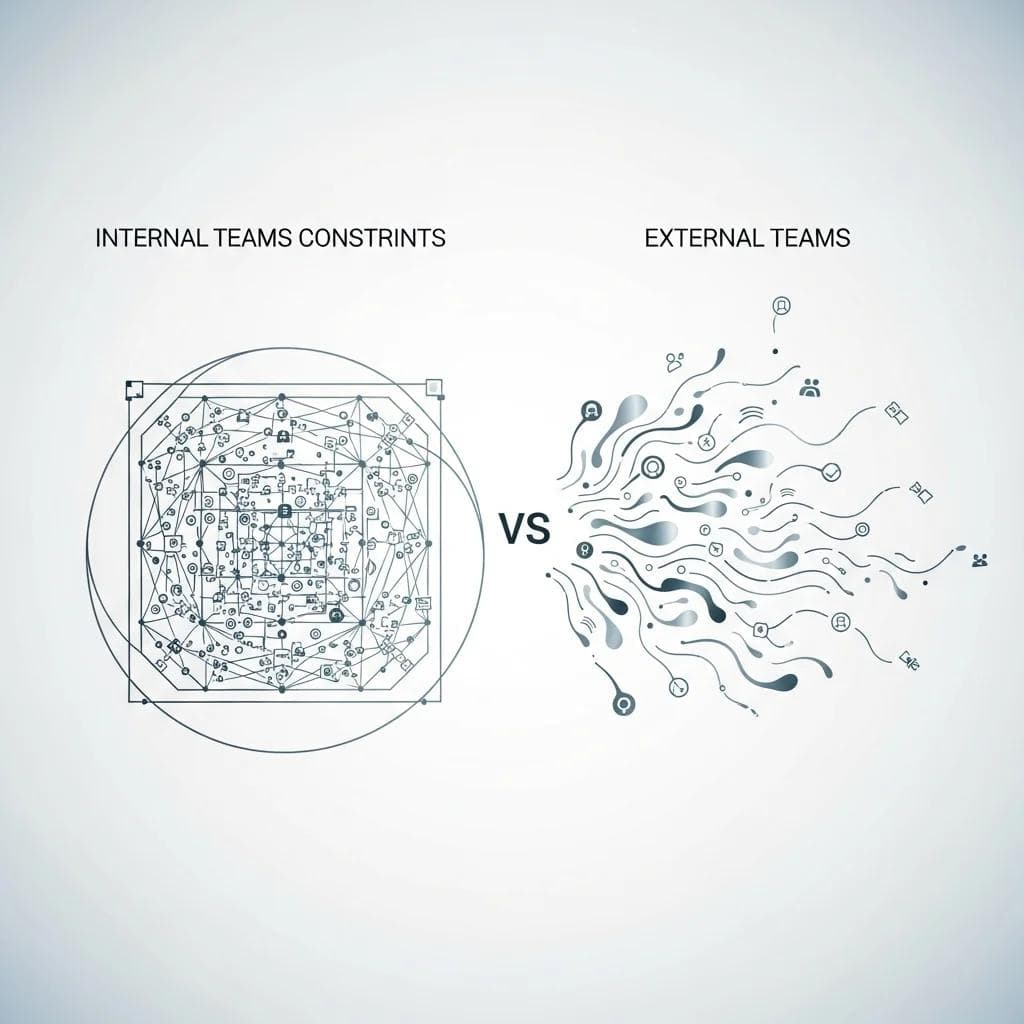
Comparison diagram showing internal team constraints vs external team freedom.
The Innovation Bottleneck in Large Organizations
Structural Barriers to Rapid Innovation
Large organizations excel at executing predictable workflows, managing risk, and delivering consistent results. However, these same strengths become weaknesses when applied to early-stage innovation. Several structural factors create innovation bottlenecks:
- Approval Chain Complexity: Ideas must pass through multiple stakeholders, committees, and review processes before receiving resources. What could be validated in weeks often takes months just to gain approval for exploration.
According to BCG research, only 25% of business leaders consider their recent innovation programs successful, largely due to these organizational challenges. The disconnect between innovation ambition and execution capability creates a gap that external teams can fill effectively.
The Cost of Slow Innovation
When organizations struggle with innovation speed, they face multiple risks:
- Market Timing: Competitors may capture opportunities while internal teams debate implementation approaches.
Professional innovation experts recommend that organizations should complete initial proof-of-concept validation within 4-8 weeks to maintain momentum and capture learning opportunities effectively.
How External Teams Accelerate Innovation
Speed Through Specialization
External ninja teams achieve remarkable speed through several key advantages:
- Dedicated Focus: Unlike internal teams managing multiple priorities, external teams work exclusively on the assigned prototype or proof of concept. This singular focus eliminates context switching and maintains momentum.
Agile Prototyping Methodologies
External teams excel at agile prototyping—a flexible approach that treats development like building with modular components. According to GeeksforGeeks research, agile prototyping follows an iterative cycle where teams create simple versions, gather feedback, and continuously improve.
The agile prototyping process typically includes:
- Rapid Concept Validation: Quick mockups and wireframes to validate core assumptions
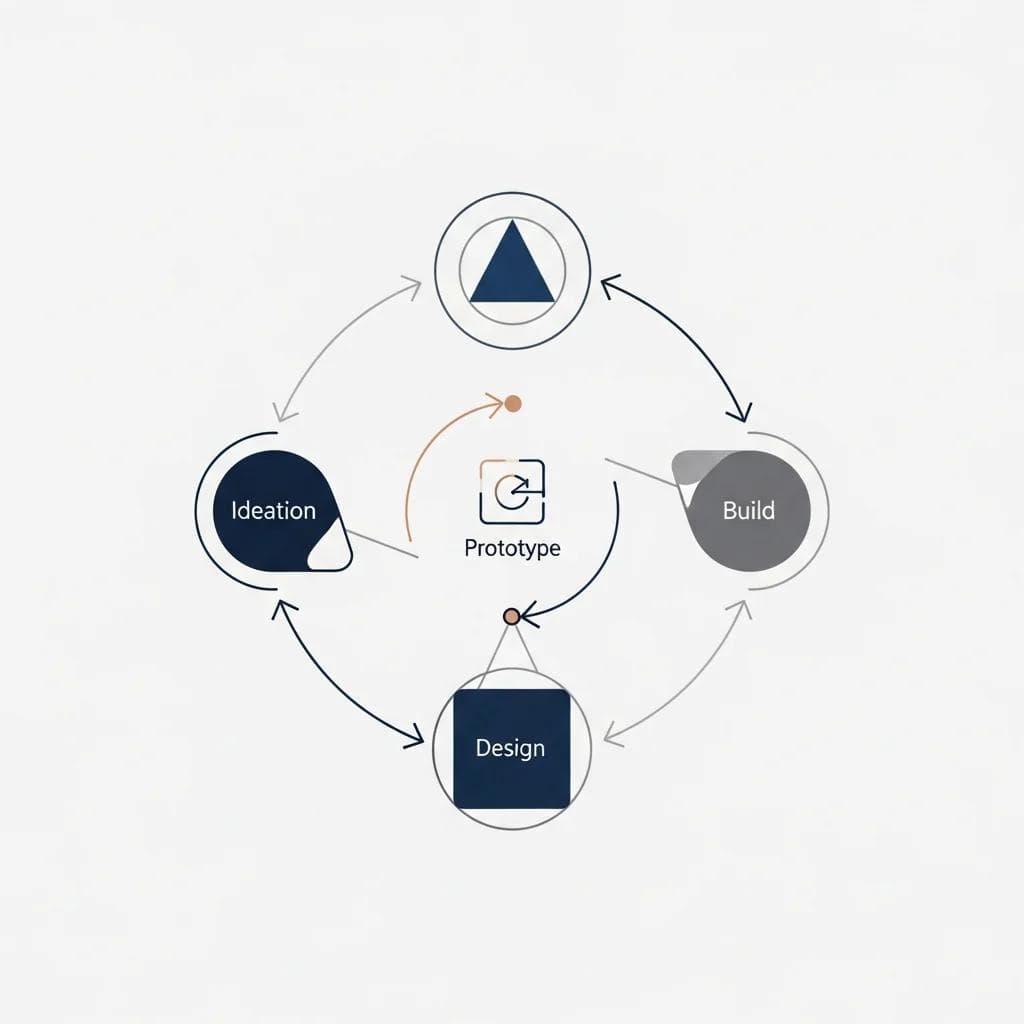
Diagram showing the agile prototyping cycle with iterative feedback loops.
This approach allows organizations to test AI strategies, workflow automations, or new digital products without committing to long-term development cycles.
Benefits of Rapid Prototyping for AI and Technology Innovation
Accelerated Learning and Validation
Rapid prototyping allows organizations to validate AI concepts and technology solutions in weeks rather than months, enabling faster learning cycles and more informed strategic decisions.
The primary benefit of external rapid prototyping is accelerated learning. Instead of spending months debating whether an AI solution might work, organizations can see working demonstrations quickly. This tangible evidence supports better decision-making and reduces uncertainty.
Key learning acceleration benefits include:
- Concept Validation: Quickly determine whether ideas are technically feasible and business-viable
Cost-Effectiveness Through Risk Reduction
External prototyping reduces overall innovation costs by minimizing wasted resources on unviable concepts. According to Stratasys research, rapid prototyping offers significant cost-effectiveness through reduced labor and tooling costs compared to traditional development approaches.
The cost benefits manifest in several ways:
- Reduced Development Risk: Validate concepts before major resource commitments
Enhanced Collaboration and Communication
Roger L. Martin's Harvard Business Review research highlights unexpected benefits of rapid prototyping, particularly in enhancing collaboration and confidence among business partners. Working prototypes create shared understanding that abstract discussions cannot achieve.
External prototyping improves organizational collaboration by:
- Visual Communication: Stakeholders can interact with concepts rather than imagine them

Before/after comparison of stakeholder alignment with and without prototypes.
When to Use External Teams vs Internal Resources
Ideal Scenarios for Ninja-as-a-Service
External teams provide maximum value in specific scenarios:
- Early-Stage Exploration: When organizations need to quickly evaluate emerging technologies like AI, machine learning, or automation tools without disrupting core operations.
When Internal Teams Are More Appropriate
Internal teams remain the best choice for:
- Production Development: Full-scale implementation of validated concepts
The most effective innovation strategy combines external teams for rapid exploration and validation with internal teams for production implementation and long-term ownership.
Implementing Ninja-as-a-Service in Your Organization
Establishing the Framework
Successful implementation of external prototyping requires careful framework establishment:
- Clear Objectives Definition: Define specific learning goals and success criteria before engaging external teams. Vague objectives lead to unfocused prototypes that don't provide actionable insights.
Selecting the Right External Partners
Not all external teams are created equal. Look for partners with:
- Relevant Technical Expertise: Deep knowledge in your specific technology areas (AI, automation, data analytics, etc.)
Managing the Engagement Process
Effective external team management requires:
- Regular Check-ins: Weekly or bi-weekly reviews to maintain alignment and address questions quickly
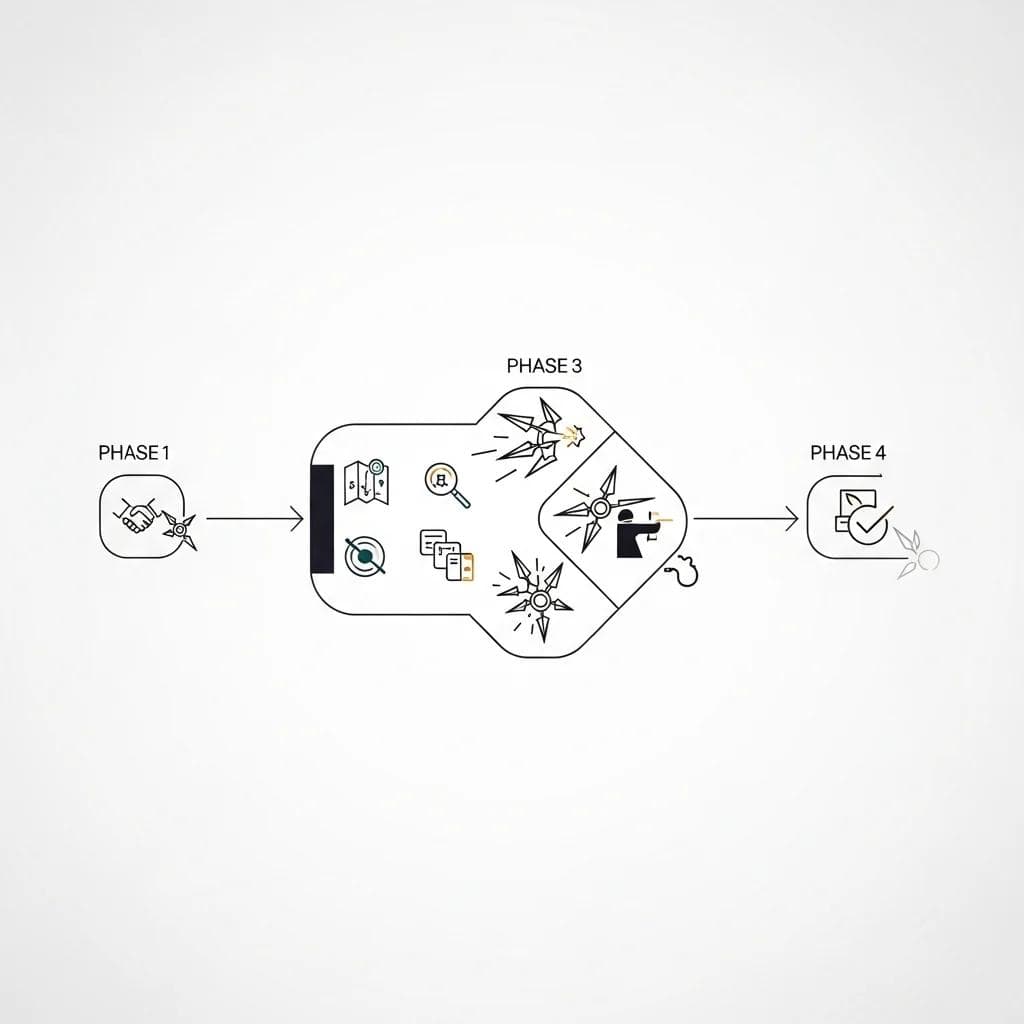
Project timeline showing typical ninja-as-a-service engagement phases.
Overcoming Common Implementation Challenges
Addressing Security and Compliance Concerns
Large organizations often worry about external access to sensitive data or systems. Address these concerns through:
- Data Anonymization: Use anonymized or synthetic data sets for prototype development when possible
Managing Internal Stakeholder Expectations
Some internal stakeholders may view external teams as threats or signs of internal capability gaps. Address this through:
- Clear Communication: Explain that external teams complement rather than replace internal capabilities
Case Studies and Real-World Applications
AI-Powered Process Automation
A large manufacturing company wanted to explore AI-driven quality control systems but couldn't spare internal developers from critical production system maintenance. An external ninja team delivered a working computer vision prototype in six weeks, demonstrating 95% accuracy in defect detection.
The prototype validated the technical approach and provided ROI projections that supported a full internal development initiative. The external team's work included detailed documentation, training data sets, and integration recommendations that accelerated internal implementation by an estimated four months.
Customer Experience Enhancement
A traditional retailer needed to evaluate chatbot technologies for customer service but lacked internal AI expertise. External specialists created three different chatbot prototypes using different AI platforms, allowing direct comparison of capabilities, costs, and integration requirements.
The prototypes enabled informed vendor selection and provided concrete examples for training customer service staff. Internal teams then took ownership of the selected solution for production deployment and ongoing optimization.
Data Analytics Modernization
A financial services firm wanted to explore modern data visualization and analytics tools but couldn't interrupt ongoing reporting system maintenance. External data specialists created interactive dashboard prototypes using sample data, demonstrating potential improvements in executive decision-making capabilities.
The prototypes revealed both opportunities and integration challenges, leading to a phased modernization approach that balanced innovation with operational stability.

Before/after dashboard comparison showing improved data visualization.
Measuring Success and ROI
Key Performance Indicators
Track the success of external prototyping initiatives through specific metrics:
- Speed Metrics:
- Learning Metrics:
- Business Impact Metrics:
Long-term Value Assessment
Organizations that implement external rapid prototyping typically see 40-60% faster innovation cycles and 30% better resource allocation for technology initiatives, according to innovation management research.
Evaluate long-term value through:
- Innovation Pipeline Health: Number of concepts successfully validated and moved to production
Best Practices for Maximizing Results
Preparation and Planning
- Define Clear Success Criteria: Establish specific, measurable outcomes that will determine prototype success before work begins.
During Development
- Maintain Regular Communication: Schedule consistent check-ins to review progress, address questions, and provide feedback without micromanaging.
Post-Prototype Actions
- Conduct Thorough Reviews: Evaluate prototypes against original success criteria and gather stakeholder feedback systematically.
The Future of External Innovation Teams
Emerging Trends
The role of external innovation teams continues to evolve with technological advancement:
- AI-Augmented Development: External teams increasingly leverage AI tools for faster code generation, testing, and documentation, further accelerating prototype delivery.
Strategic Implications
- Speed as Competitive Advantage: Organizations that can validate and implement new technologies faster gain significant market advantages.
Frequently Asked Questions
What is the typical timeline for a Ninja-as-a-Service engagement?
Most rapid prototyping engagements complete within 4-8 weeks, depending on complexity. Simple concept validation may take 2-3 weeks, while comprehensive AI proofs of concept typically require 6-8 weeks for meaningful results.
How do external teams handle sensitive business data during prototyping?
Professional external teams use anonymized data sets, sandbox environments, and strict security protocols. Many prototypes can be developed using synthetic or sample data that demonstrates functionality without exposing sensitive information.
What happens to the prototype code and documentation after completion?
All code, documentation, and learnings transfer to your organization upon completion. External teams typically provide comprehensive handoff materials including technical documentation, deployment guides, and recommendations for production implementation.
How do you ensure external teams understand our business context?
Effective external teams begin engagements with discovery sessions to understand business objectives, constraints, and success criteria. They maintain regular communication with key stakeholders throughout development to ensure alignment.
Can external teams work with our existing technology stack?
Yes, experienced external teams can work with existing systems and technologies. However, they may also recommend modern alternatives that could provide better results or faster development if appropriate for prototype goals.
How do we measure the ROI of rapid prototyping investments?
ROI measurement includes direct costs saved from avoiding full development of unviable concepts, time savings from faster validation, and revenue potential identified through successful prototypes. Most organizations see positive ROI within the first few engagements.
What size projects are appropriate for external rapid prototyping?
External teams are most effective for projects that can be meaningfully prototyped within 4-8 weeks. This typically includes single-feature demonstrations, technology evaluations, process automation proofs of concept, and AI/ML feasibility studies.
How do we manage intellectual property concerns with external teams?
Professional external teams work under clear intellectual property agreements that assign all developed assets to your organization. Establish IP ownership terms before engagement begins to ensure clarity and protection.
What internal resources are required to support external prototyping teams?
You'll need to provide stakeholder access for requirements gathering and feedback, subject matter experts for domain knowledge, and basic infrastructure access. Most external teams minimize internal resource requirements while maintaining effective collaboration.
How do we transition successful prototypes to internal development teams?
Successful transitions require comprehensive documentation, code reviews, knowledge transfer sessions, and ongoing support during early implementation phases. Plan transition activities as part of the original engagement scope.
Conclusion: Accelerating Innovation Through Strategic Partnerships
In an era where technological change accelerates continuously, organizations cannot afford to let promising ideas languish in internal processes. The Ninja-as-a-Service approach provides a strategic solution that combines the stability of large organizations with the agility of specialized external teams.
By leveraging external teams for rapid prototyping and AI proofs of concept, organizations can explore bold ideas, validate them quickly, and make informed decisions without overloading internal resources or compromising core operations. This approach enables faster learning, smarter resource allocation, and more confident innovation leadership.
The key to success lies in viewing external teams as strategic partners rather than vendors—specialists who complement internal capabilities and accelerate innovation cycles. When implemented thoughtfully, Ninja-as-a-Service becomes a competitive advantage that enables organizations to lead rather than follow in technological advancement.
Innovation requires speed, focus, and freedom from internal constraints. Organizations that master the strategic use of external teams for rapid prototyping will consistently outpace competitors in identifying opportunities, validating solutions, and bringing innovations to market.
The question isn't whether your organization needs faster innovation—it's whether you're willing to embrace the tools and partnerships that make it possible. Ninja-as-a-Service offers a proven path forward for organizations ready to transform their innovation capabilities and achieve measurable competitive advantage through strategic external partnerships.
Community
Join the conversation
More Blog Posts

AI Agents: The Next Generation of Business Software Transforming Operations
Discover how AI agents are revolutionizing business operations by transforming software into proactive collaborators that anticipate needs and streamline complex processes autonomously.

AI Agents in Enterprise Workflows: Transforming Business Operations for 2026
Discover how AI agents are revolutionizing enterprise workflows, transforming businesses into proactive, autonomous entities that enhance efficiency and drive measurable value.

Scaling AI Solutions: From Prototype to Production Best Practices
Learn how to successfully scale AI solutions from prototype to production, focusing on key practices that align data engineering with business goals, especially in healthcare.